Cymdeithas Corau Meibion Cymru
EISTEDDFOD GENEDLAETHOL
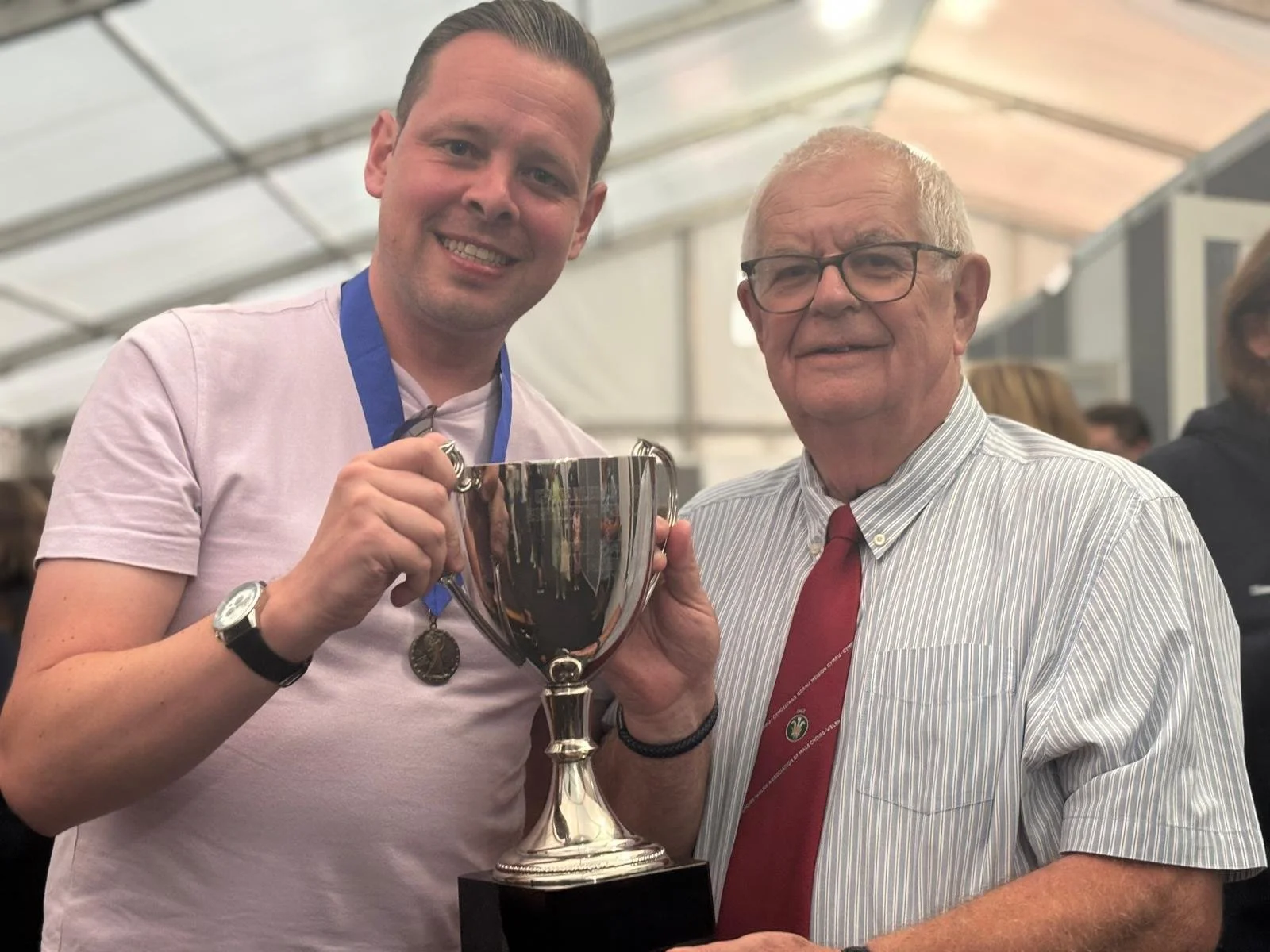
Llongyfarchiadau i Bechgyn Bro Tâf, o Gaerdydd, enillwyr dosbarth Côr Tenor / Bas yn yr Eisteddod Genedlaethol 2026. Llongyfarchiadau hefyd i Gôr Meibion Taf a Chôr Meibion Ar ôl Tri a ddaeth yn ail.
Derbyniodd y côr buddugol Gwpan newydd 'Cymdeithas Corau Meibion Cymru', y byddant yn ei ddal am 12 mis, a derbyniodd yr arweinydd buddugol Fedal Goffa Ivor E Sims.
Cynhelir yr eisteddfod genedlaethol yng Nghymru yn ystod wythnos gyntaf mis Awst. Mae'n ŵyl flynyddol sy'n para am wyth diwrnod. Gan newid rhwng gogledd a de Cymru, mae'r 'Maes' (lle mae digwyddiadau'n digwydd) yn newid bob blwyddyn, gan ddenu cannoedd o filoedd o ymwelwyr a chynnal cannoedd o stondinau a stondinau. Mae'r ŵyl hon yn arddangosfa ar gyfer cerddoriaeth, dawns, llenyddiaeth, celfyddydau gweledol, a pherfformiadau gwreiddiol. Mae'n ŵyl gynhwysol a phoblogaidd, sy'n gwahodd dysgwyr Cymraeg a'r rhai nad ydynt yn siarad Cymraeg. Felly, os nad ydych chi'n siaradwr Cymraeg, mae croeso i chi bob amser.
Bydd Eisteddfod Genedlaethol 2027 yn cael ei chynnal ar dir fferm yn ardal Glantwymyn ger Machynlleth, Powys, tra bydd Eisteddfod Genedlaethol 2028 yn cael ei chynnal yng Nghaerdydd.
Corau a'r Eisteddfod Genedlaethol Frenhinol – yr hanes ac ymarferoldeb
Cyd-destun hanesyddol Mae'r cysylltiad rhwng corau meibion â'r Eisteddfod yn hen hanes balch yn deillio mor belled ag Eisteddfod Abertawe 1863 pan darparwyd cystadleuaeth 'i feibion o gorau cymysg'. Cafwyd twf aruthrol yn ein corau yn sgîl y chwyldro diwydiannol, a doedd hi ddim yn eithriad I weld torf o 20,000 yn mynychu'r Pafiliwn ar gyfer cystadleuaeth y corau meibion. Enghraifft nodedig oedd Eisteddfod 1891, eto yn Abertawe pan y cystadlodd 10 o gorau am 5 awr gyda Phontycymer yn fuddugol.
Ar ôl llanw a thrau y blynyddoedd rhwng y rhyfeloedd, daeth y corau meibion yn ôl i'w bri gyda Trecori yn llwyddo am bedair blynedd o'r bron rhwng 1946-9 gan fynd â chanu corawl i entrychion newydd. Crewyd nifer o'n corau presennol yn y 1950au a'r 60au ac ystyriwyd cystadlu yn yr Eisteddfod fel modd i gynnal balchder a chreu cyhoeddusrwydd iddynt.
Mae'r eisteddfod yn ymweld â gwahanol rannau o Gymru – yn newid rhwng De a Gogledd Cymru. Yn 2023 fe'i cynhaliwyd ym Moduan (ger Pwllheli), yn 2024 ym Mhontypridd (RhCT), ac yn 2025 yn Wrecsam. Ar ôl Sir Benfro bydd yn symud i Bowys yn 2027.
Mae llawer o gorau yn defnyddio'r lleoliad fel sbardun i ffurfio neu gystadlu. Sefydlwyd Only Boys Aloud er enghraifft gyda'r bwriad o gystadlu yn eisteddfod Blaenau'r Dyffrynnoedd yn 2010 ac yn 2022 yr enillwyr yn Nhregaron oedd 'Ar ôl Tri' o Geredigion.
Cystadleuaethau Roedd un gystadleuaeth o'r blaen ar gyfer corau meibion o ddim llai na 20 llais ar ddydd Sadwrn ola'r Eisteddfod (fel arfer yr 2ail Sadwrn yn Awst).. Mae pob côr yn cyflwyno rhaglen hunan-ddewisiad ddim hwy na 12 munud. Rhaid i un darn fod yn ddi-gyfeiliant, ac un darn gan gyfansoddwr â chysylltiadau amlwg â Chymru. Mae'r buddugwyr yn derbyn cwpan a gyflwynir gan Gymdeithas Corau Meibion Cymru a'i chadw am flwyddyn a rhodd o £750 gan noddwyr ar wahan. Mae rhoddion hefyd i'r sawl sy'n ail a thrydydd. Mae'n rhaid I berfformwyr ganu yn gyfangwbl yn y Gymraeg – gan fod hon yn unig ŵyl pob oedran i arddangos yr iaith i'r byd mae'r trefnwyr am ochel rhag y llwybr llithrig. Er hynny mae darpariaeth lled eang i'r sawl nad sy'n siarad Cymraeg a dysgwyr ac mae nifer sy'n mynychu a deiliad sdondinau ddim yn medru'r Gymraeg. Mae nifer y corau meibion sy'n cystadlu yn amrywio o bwynt isel o 6 yng Nghaerdydd yn 2018 I 15 yn Llanrwst y flwyddyn ganlynnol.
Yr Eisteddfod yn addasu Mae'r Eisteddfod yn addasu'n gyson gyda defnydd cynyddol o'r pafiliwn gyda'r nos ar gyfer cyngherddau mawrion yn hytrach na chystadlu, gydag ambell i Gôr Meibion yn ymmdangos. O reidrwydd mae hyn yn tynhau a lleihau yr amser a glustnodir ar gyfer cystadlu. Mae yna gryn drafodaeth ac ymgynghoriad pellach am yr effaith ar gystadleuaethau corawl.
Mae'r rhaglen wedi ei ail-wampio yn cynnig rhai o'r newidiadau mwyaf i gystadleuthau'r prif lwyfan ers blynyddoedd ac annogir ein corau i ddwys ystyried y rhaglen gan fod cyfleoedd yn codi i gystadlu tu hwnt i gyfyngderau'r gystadleuaeth i gorau meibion fydd yn parhau i gael ei gynnal ar y Sadwrn olaf.
Fe fydd o leiaf un gystadleuaeth gorawl bob dydd yn yr Eisteddfod flwyddyn hon. Ar y Sadwrn cyntaf ceir cystadleuaeth i gorau yn cynrychioli'r Eisteddfodau lleol. Ar y Sul fe fydd cystadleuaeth newydd sbon i gorau sy'n newydd-ddyfodiaid i'r Eisteddfod gyda'r annogaeth i gorau cymunedol ymddangos. Ar ddydd Llun tro corau dros 60 oed fydd wrthi a ddydd Mawrth, y sawl o dan 25 mlwydd. Ar ddydd Mercher bydd yna gystadleuaeth agored i bob côr. Ar ddydd Iau fe fydd yna gystadleuaeth i gorau merched (llais S/A) a chystadleuaeth i gorau dysgwyr. Ar y dydd Gwener fe fydd tri cystadleuaeth gorawl - côr Cerdd Dant, côr cymysg, a chôr alawon gwerin..
I'r corau hynny nad ydynt am ddilyn trywydd cystadleuol, mae yna gyfleon amgen ar y maes. Ym Moduan flwyddyn hon, roedd nifer o gorau meibion lleol wedi cael cyfle I berfformio am hyd at awr ar lwyfan y maes, lle agored gydag ychydig o gysgod yn y man lle gweinir bwyd a diod fel arfer.
Welsh Association of Male Choirs
NATIONAL EISTEDDFOD
Congratulation to Bechgyn Bro Tâf, from Cardiff, winners of the Tenor / Bass Choir class at the National Eisteddfod 2026. Also congratulations to Côr Meibion Taf and Côr Meibion Ar ôl Tri who were runners up.
The winning choir received the new 'Welsh Association of Male Choirs' Cup, which they will hold for 12 moths, and the winning conductor received the Ivor E Sims Memorial Medal.
The National Eisteddfod is held in Wales during the first week of August. It’s an annual festival that lasts for eight days. Alternating between north and south Wales, the ‘Maes’ (venues where events take place) change every year, attracting hundreds of thousands of visitors and hosting hundreds of stands and stalls. This festival is the showcase for music, dance, literature, visual arts, and original performances. It’s an inclusive and popular festival, inviting Welsh learners and those who don’t speak Welsh. So, if you are a non-Welsh speaker, you’re always welcome.
The 2027 National Eisteddfod will be held on farmland in the Glantwymyn area near Machynlleth, Powys, while the 2028 National Eisteddfod will be held in Cardiff.
Visit https://eisteddfod.wales/
Royal National Eisteddfod and choirs – history and practicalities
Historical context The association between Male Voice Choirs and the Eisteddfod is both long and proud, dating as far back as the Swansea Eisteddfod of 1863 with a competition for 'male voices from mixed choirs'. The onset of the industrial revolution led to the burgeoning of choirs, and it was common for audiences of 20,000 to flock to the Pavilion to watch the male choir competitions. Striking examples included the notable Eisteddfod again in Swansea in 1891 where 10 choirs competed for 5 hours with Pontycymer victorious.
After the ebb and flow of the inter-war years, choirs came back with a vengeance with Treorchy claiming the notable quadruple success in Eisteddfodau between 1946-9 and taking the standard of choral singing to a brand-new level. Many of our current choirs were formed in the 1950s and 60s and saw competing at the Eisteddfodau as a means of acquiring welcome publicity and immense prestige.
The Eisteddfod visits different parts of Wales – alternating between South and North Wales. In 2023 it was held in Boduan (near Pwllheli) , in 2024 in Pontypridd (RCT), in 2025 in Wrecsam. After Pembrokeshire it will move to Powys in 2027.
Many choirs use the location as a spur to form or enter competition. Only Boys Aloud for example was established with the purpose of competing at the Heads of the Valley Eisteddfod in 2010 and in 2022 the winners in Tregaron were Ceredigion based 'Ar ôl Tri'
Competitions There was previously one competition for male voice choirs of no less than 20 voices taking place on the final Saturday of the Eisteddfod (usually the 2nd Saturday in August). Choirs provide a programme of no more than 12 minutes but at least one piece must be unaccompanied, and one piece must be by a composer with links to Wales. The victors receive a cup awarded by the Welsh Association of Male Choirs and a cash prize from separate sponsors of £750. There are also cash prizes for those coming 2nd and 3rd. Performers at the Eisteddfod must abide by the rule to sing in Welsh – as this festival is a showcase of the Welsh language, it is commonly held that any slackening of this rule will lead to a 'slippery slope'. However, there is widespread provision for non-Welsh speakers and Welsh learners and many Eisteddfod attendees and stall holders don't speak the language. Numbers of choirs competing have fluctuated from a low point of 6 at the Cardiff Eisteddfod in 2018 to 15 in Llanrwst in 2019
An evolving Eisteddfod
The Eisteddfod is constantly evolving and in recent years the Pavilion has been increasingly used to showcase evening concerts, which very occasionally have featured male voice choirs. This is leading to tightening and curtailing the time available for competitions, and there is an active debate and a further period of consultation on what this may mean for the choral competitions.
The revamped 2024 programme heralded some of the biggest changes in years and member choirs are encouraged to take a detailed look as there may be opportunities to compete beyond the confines of the traditional male voice choral competition which will continue to take place on the last Saturday.
There will now be at least one choral competition on each day of the Eisteddfod. This starts on the opening Saturday when there will be a competition for choirs from the local eisteddfodau. On Sunday there will be a brand new competition for choirs new to the Eisteddfod with an encouragement for community choirs to present. Monday will now stage the competition for choirs over the age of 60 and Tuesday for choirs under the age of 25. Wednesday will host on open competition for all choirs. On Thursday there will be a competition for Ladies choirs (referred to as S/A voices) together with a choral competition for Welsh Learners. Friday will see three choral competitions - 'Cerdd Dant' choir, Mixed Choir, and Folk music choir.
For choirs not wishing to go down the competition route, there are alternative opportunities to perform on the 'maes'. At Boduan this year, several local Male Voice Choirs have been given a slot of up to an hour to perform on 'Llwyfan y Maes' – a covered but open area where food and drink is served.
———————————————————————————